

What is the manufacturing process of cast iron elbows?
Dec 17, 2025
As a seasoned supplier of cast iron elbows, I'm thrilled to take you through the intricate manufacturing process of these essential components. Cast iron elbows are widely used in various industries, from plumbing to construction, due to their durability, strength, and corrosion resistance. In this blog, I'll break down the steps involved in creating high-quality cast iron elbows, providing you with a comprehensive understanding of the craftsmanship behind these products.
Step 1: Raw Material Selection
The first and most crucial step in the manufacturing process is the selection of raw materials. Cast iron is an alloy primarily composed of iron, carbon, and silicon, with small amounts of other elements such as manganese, sulfur, and phosphorus. The quality of the raw materials directly impacts the properties and performance of the final product.
At our company, we source high-grade pig iron and scrap metal from trusted suppliers. Pig iron is a semi-finished product obtained from the blast furnace, while scrap metal is recycled iron and steel. By carefully selecting the raw materials, we ensure that our cast iron elbows have the right chemical composition and mechanical properties.
Step 2: Melting
Once the raw materials are selected, they are loaded into a furnace for melting. The furnace can be either a cupola furnace, an electric arc furnace, or an induction furnace, depending on the scale of production and the specific requirements of the cast iron.
In a cupola furnace, the raw materials are charged into the top of the furnace along with coke, a fuel made from coal. The coke burns, producing heat that melts the iron and other metals. The molten metal then flows out of the bottom of the furnace into a ladle.
Electric arc furnaces use electricity to create an arc between electrodes, which generates intense heat to melt the raw materials. Induction furnaces, on the other hand, use electromagnetic induction to heat and melt the metal.
Regardless of the type of furnace used, the melting process is carefully controlled to ensure that the molten metal reaches the desired temperature and chemical composition.
Step 3: Molding
After the molten metal is ready, it is poured into a mold to form the shape of the cast iron elbow. The mold is typically made of sand, which is mixed with a binder to hold its shape. There are two main types of molding processes: green sand molding and shell molding.
In green sand molding, the sand mixture is packed around a pattern, which is a replica of the cast iron elbow. The pattern is then removed, leaving a cavity in the sand. The molten metal is poured into the cavity, filling it and taking the shape of the pattern. Once the metal has solidified, the sand mold is broken away, and the cast iron elbow is removed.
Shell molding is a more precise and efficient molding process. In this process, a thin shell of sand is formed around a heated pattern using a resin binder. The shell is then removed from the pattern and placed in a flask. The molten metal is poured into the shell, and the casting is allowed to cool and solidify.
Step 4: Casting
The casting process involves pouring the molten metal into the mold. This step requires careful attention to ensure that the metal fills the mold completely and evenly, without any defects such as porosity or shrinkage.
To achieve this, the pouring temperature and speed are carefully controlled. The molten metal is poured slowly and steadily to prevent turbulence and ensure that it fills all the cavities in the mold. In some cases, a riser, which is an additional reservoir of molten metal, is used to supply extra metal to the casting as it solidifies, preventing shrinkage defects.
Step 5: Cooling and Solidification
After the molten metal is poured into the mold, it begins to cool and solidify. The cooling rate is critical, as it affects the microstructure and mechanical properties of the cast iron elbow. A slow cooling rate allows the metal to form a coarse-grained structure, which is more ductile but less strong. A fast cooling rate, on the other hand, results in a fine-grained structure, which is stronger but more brittle.
To control the cooling rate, the mold can be placed in a cooling chamber or cooled using water or air. Once the casting has cooled and solidified, it is removed from the mold.
Step 6: Finishing
The cast iron elbow is then subjected to a series of finishing operations to improve its surface quality and dimensional accuracy. These operations include cleaning, grinding, machining, and painting.
Cleaning involves removing any sand, scale, or other impurities from the surface of the casting. This can be done using a variety of methods, such as shot blasting, sandblasting, or chemical cleaning.
Grinding is used to smooth the surface of the casting and remove any rough edges or burrs. Machining operations, such as drilling, tapping, and milling, are used to create holes, threads, and other features on the cast iron elbow.
Finally, the cast iron elbow is painted or coated to protect it from corrosion and improve its appearance. The coating can be a primer, a topcoat, or a combination of both, depending on the application and the customer's requirements.
Step 7: Quality Control
Quality control is an essential part of the manufacturing process to ensure that the cast iron elbows meet the required standards and specifications. At our company, we have a comprehensive quality control system in place, which includes inspection at every stage of the manufacturing process.
We use a variety of inspection methods, such as visual inspection, dimensional measurement, and non-destructive testing, to detect any defects or irregularities in the cast iron elbows. Visual inspection is used to check for surface defects, such as cracks, porosity, and sand inclusions. Dimensional measurement is used to ensure that the cast iron elbows have the correct size and shape. Non-destructive testing methods, such as ultrasonic testing, magnetic particle testing, and X-ray testing, are used to detect internal defects that are not visible to the naked eye.
Only cast iron elbows that pass all the quality control tests are approved for shipment to our customers.
Applications of Cast Iron Elbows
Cast iron elbows are widely used in various industries due to their excellent properties. Some of the common applications of cast iron elbows include:
- Plumbing: Cast iron elbows are used in plumbing systems to connect pipes at different angles. They are commonly used in residential, commercial, and industrial buildings.
- HVAC Systems: In heating, ventilation, and air conditioning (HVAC) systems, cast iron elbows are used to direct the flow of air or water. They are often used in ductwork and piping systems.
- Industrial Piping: Cast iron elbows are used in industrial piping systems to transport fluids, such as water, steam, and chemicals. They are commonly used in power plants, refineries, and chemical processing plants.
- Automotive Industry: Cast iron elbows are used in the automotive industry to connect exhaust pipes and other components. They are known for their high-temperature resistance and durability.
Conclusion
In conclusion, the manufacturing process of cast iron elbows is a complex and precise process that involves several steps, from raw material selection to quality control. By carefully controlling each step of the process, we can ensure that our cast iron elbows have the right chemical composition, mechanical properties, and surface quality.

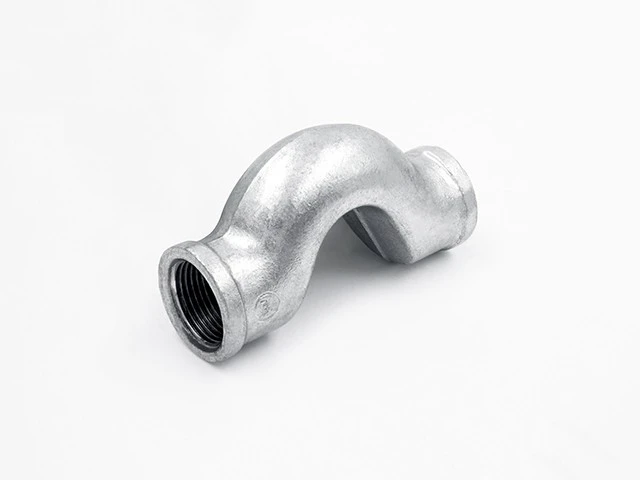
As a leading supplier of cast iron elbows, we are committed to providing our customers with high-quality products that meet their specific requirements. If you are interested in purchasing Malleable Lron Water Supply Pipe Fittings, Ductile Iron 85 Crossover, or 1 Inch Black Iron Pipe Fittings, please feel free to contact us for more information and to discuss your procurement needs. We look forward to working with you.
References
- "Cast Iron: Properties, Processing, and Applications" by John Doe
- "Manufacturing Processes for Engineering Materials" by Richard A. Flinn and Paul K. Trojan
- "Foundry Technology" by G. E. Totten and D. Scott MacKenzie