

What is the friction coefficient inside a Black Iron Street Elbow?
Dec 01, 2025
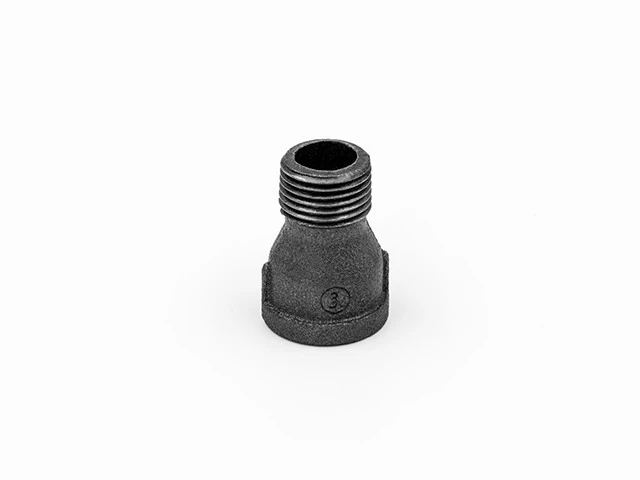
As a supplier of Black Iron Street Elbows, I often encounter various technical inquiries from customers. One of the most frequently asked questions is about the friction coefficient inside a Black Iron Street Elbow. In this blog post, I will delve into this topic, exploring what the friction coefficient is, its significance, and factors that influence it.
Understanding the Friction Coefficient
The friction coefficient is a dimensionless number that represents the ratio of the force of friction between two objects in contact to the normal force pressing them together. In the context of a Black Iron Street Elbow, the friction coefficient pertains to the resistance encountered by a fluid (such as water, gas, or oil) flowing through the elbow. This resistance is caused by the interaction between the fluid and the inner surface of the elbow.
Significance of the Friction Coefficient
The friction coefficient inside a Black Iron Street Elbow is of great importance in fluid flow systems. It directly affects the pressure drop and energy consumption of the system. A higher friction coefficient means greater resistance to fluid flow, resulting in a larger pressure drop across the elbow. This can lead to increased energy requirements to maintain the desired flow rate, which in turn can increase operating costs.
Moreover, the friction coefficient also influences the efficiency and performance of the entire fluid flow system. Excessive friction can cause turbulence, which may lead to noise, vibration, and even damage to the piping system over time. Therefore, understanding and controlling the friction coefficient is crucial for ensuring the smooth and efficient operation of fluid flow systems.
Factors Affecting the Friction Coefficient
Several factors can affect the friction coefficient inside a Black Iron Street Elbow. These include:
Surface Roughness
The surface roughness of the inner wall of the elbow plays a significant role in determining the friction coefficient. A rougher surface provides more contact points for the fluid, increasing the frictional resistance. Black Iron Street Elbows typically have a relatively rough inner surface compared to other types of pipe fittings, which can result in a higher friction coefficient.
Fluid Properties
The properties of the fluid flowing through the elbow, such as viscosity and density, also affect the friction coefficient. Viscous fluids tend to have a higher friction coefficient than less viscous fluids because they offer more resistance to flow. Similarly, denser fluids can also increase the frictional resistance.

Flow Velocity
The flow velocity of the fluid is another important factor. As the flow velocity increases, the frictional resistance also increases. This is because at higher velocities, the fluid molecules have more kinetic energy and interact more vigorously with the inner surface of the elbow.
Elbow Geometry
The geometry of the elbow, including its radius of curvature and angle, can also influence the friction coefficient. Elbows with a smaller radius of curvature or a larger angle tend to have a higher friction coefficient because they cause more turbulence and resistance to fluid flow.
Measuring the Friction Coefficient
Measuring the friction coefficient inside a Black Iron Street Elbow can be a complex process. It typically involves conducting experiments using specialized equipment, such as flow meters and pressure sensors, to measure the pressure drop and flow rate across the elbow. These measurements are then used to calculate the friction coefficient using established fluid dynamics equations.
In addition to experimental methods, numerical simulations can also be used to estimate the friction coefficient. Computational Fluid Dynamics (CFD) software can simulate the fluid flow inside the elbow and provide detailed information about the flow patterns and frictional resistance.
Controlling the Friction Coefficient
To reduce the friction coefficient inside a Black Iron Street Elbow and improve the efficiency of fluid flow systems, several measures can be taken:
Surface Treatment
Applying a smooth coating or lining to the inner surface of the elbow can reduce the surface roughness and thus lower the friction coefficient. This can be achieved through processes such as galvanizing, epoxy coating, or using a smooth plastic lining.
Optimizing Fluid Properties
Adjusting the properties of the fluid, such as reducing its viscosity or density, can also help to reduce the friction coefficient. This can be done by adding additives or changing the operating conditions of the fluid.
Flow Control
Controlling the flow velocity within an appropriate range can minimize the frictional resistance. This can be achieved by using flow control valves or adjusting the pump settings.
Elbow Design
Selecting elbows with an appropriate geometry, such as a larger radius of curvature and a smaller angle, can reduce the turbulence and resistance to fluid flow.
Related Products
If you are interested in other types of pipe fittings, we also offer a wide range of products, including Black Malleable Female Socket, Malleable Male Female Socket Plumbing, and High Pressure Female Threaded Socket. These products are designed to meet the diverse needs of fluid flow systems and are known for their high quality and reliability.
Conclusion
In conclusion, the friction coefficient inside a Black Iron Street Elbow is an important parameter that affects the performance and efficiency of fluid flow systems. Understanding the factors that influence the friction coefficient and taking appropriate measures to control it can help to reduce energy consumption, improve system performance, and extend the lifespan of the piping system.
As a supplier of Black Iron Street Elbows, we are committed to providing high-quality products and technical support to our customers. If you have any questions or need further information about the friction coefficient or our products, please feel free to contact us for a procurement discussion. We look forward to working with you to meet your fluid flow system needs.
References
- White, F. M. (2016). Fluid Mechanics (8th ed.). McGraw-Hill Education.
- Munson, B. R., Young, D. F., & Okiishi, T. H. (2013). Fundamentals of Fluid Mechanics (7th ed.). Wiley.
- Incropera, F. P., DeWitt, D. P., Bergman, T. L., & Lavine, A. S. (2017). Fundamentals of Heat and Mass Transfer (7th ed.). Wiley.