

What are the fire - resistance properties of a Malleable Iron Cross?
Dec 03, 2025
As a supplier of Malleable Iron Cross, I am often asked about the various properties of our products, especially their fire - resistance. In this blog, I will delve into the fire - resistance properties of Malleable Iron Cross, exploring the scientific basis behind it and its practical implications in different applications.
Composition and Structure of Malleable Iron Cross
Malleable iron is a type of cast iron that has been heat - treated to improve its ductility and toughness. It is made by annealing white cast iron, which changes the brittle cementite phase into graphite nodules. The Malleable Iron Cross, a specific product in our portfolio, inherits these characteristics from the malleable iron material.
The chemical composition of malleable iron typically includes iron (Fe) as the base element, with small amounts of carbon (C), silicon (Si), manganese (Mn), sulfur (S), and phosphorus (P). The graphite nodules dispersed in the iron matrix play a crucial role in determining the mechanical and physical properties of the material.
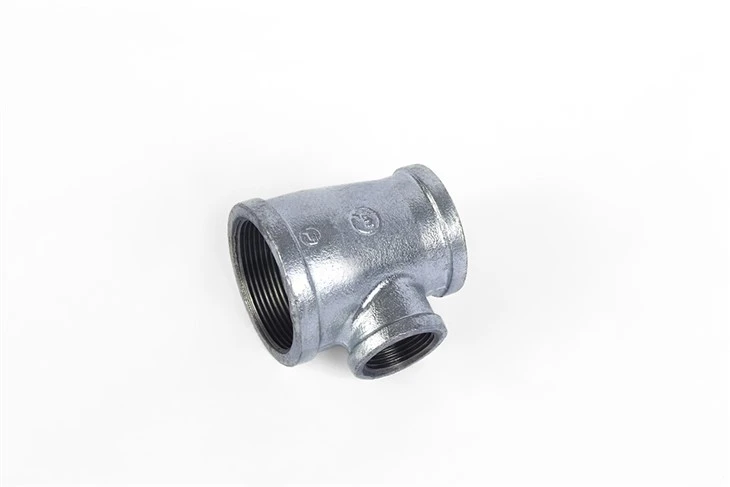

Fire - Resistance Mechanisms of Malleable Iron Cross
High Melting Point
One of the primary factors contributing to the fire - resistance of Malleable Iron Cross is its high melting point. Iron has a melting point of approximately 1538°C (2800°F). This means that under normal fire conditions, which usually reach temperatures well below the melting point of iron, the Malleable Iron Cross will maintain its solid form. For example, in most building fires, the temperatures rarely exceed 1000°C (1832°F). As a result, the Malleable Iron Cross can withstand the heat and continue to perform its structural function without significant deformation or failure.
Thermal Conductivity
The thermal conductivity of malleable iron also affects its fire - resistance. Malleable iron has a relatively high thermal conductivity, which means it can conduct heat away from the source of the fire. When exposed to a fire, the heat is distributed throughout the Malleable Iron Cross, preventing localized overheating. This helps to maintain the integrity of the fitting and reduces the risk of thermal stress - induced cracking or failure.
Oxidation Resistance
Another important aspect of fire - resistance is the oxidation resistance of the material. When exposed to high temperatures in the presence of oxygen, metals can oxidize, which can weaken the material over time. Malleable iron has a certain degree of oxidation resistance due to the formation of a protective oxide layer on its surface. This oxide layer acts as a barrier, preventing further oxidation and protecting the underlying metal from corrosion and degradation.
Applications and Fire - Safety Considerations
Plumbing Systems
In plumbing systems, Malleable Iron Cross is commonly used to connect pipes at intersections. In the event of a fire, the fire - resistance of the Malleable Iron Cross is crucial to ensure the integrity of the plumbing system. A fire - resistant fitting can prevent the spread of fire through the pipes and maintain the water supply for firefighting purposes. For example, in a commercial building, if the Malleable Iron Cross in the sprinkler system fails due to fire damage, the sprinkler system may not function properly, which can lead to a more severe fire.
Industrial Pipelines
In industrial settings, Malleable Iron Cross is used in pipelines for transporting various fluids and gases. These pipelines may be exposed to high - temperature environments or potential fire hazards. The fire - resistance of the Malleable Iron Cross ensures the safety and reliability of the pipeline system. For instance, in a chemical plant, a fire - resistant fitting can prevent the leakage of flammable substances and reduce the risk of explosions.
Comparison with Other Pipe Fittings
Malleable Iron Reducing Tee Pipe Fitting
The Malleable Iron Reducing Tee Pipe Fitting shares similar fire - resistance properties with the Malleable Iron Cross. Both are made of malleable iron and benefit from its high melting point, thermal conductivity, and oxidation resistance. However, the shape and size of the reducing tee may affect its heat distribution and stress distribution under fire conditions.
Elbow Malleable Cast Iron
The Elbow Malleable Cast Iron also has good fire - resistance. Similar to the Malleable Iron Cross, it can withstand high temperatures and maintain its structural integrity. However, the curved shape of the elbow may introduce additional stress concentrations during a fire, which needs to be considered in the design and installation.
Black Iron Pipe Fittings Mf Bend
The Black Iron Pipe Fittings Mf Bend is another type of pipe fitting. While it also has some degree of fire - resistance, the surface treatment and composition of black iron may affect its oxidation resistance and long - term performance under fire conditions compared to malleable iron.
Conclusion and Call to Action
In conclusion, the Malleable Iron Cross has excellent fire - resistance properties due to its high melting point, thermal conductivity, and oxidation resistance. These properties make it a reliable choice for various applications where fire - safety is a concern, such as plumbing systems and industrial pipelines.
If you are in need of high - quality Malleable Iron Cross or other malleable iron pipe fittings, we are here to provide you with the best products and services. Our products are manufactured to strict quality standards and have been tested to ensure their performance in different environments. Contact us today to discuss your specific requirements and start a fruitful business relationship.
References
- ASM Handbook Committee. (2004). ASM Handbook Volume 1: Properties and Selection: Irons, Steels, and High - Performance Alloys. ASM International.
- Perry, R. H., & Green, D. W. (1997). Perry's Chemical Engineers' Handbook. McGraw - Hill.