

How to test the quality of pipes fittings elbow?
Dec 10, 2025
Testing the quality of pipes fittings elbow is a crucial process for ensuring the safety and efficiency of piping systems. As a supplier of pipes fittings elbow, I understand the significance of providing high-quality products to our customers. In this blog post, I will share some effective methods to test the quality of pipes fittings elbow, offering insights into maintaining the integrity of your piping infrastructure.
Visual Inspection
The first step in testing the quality of pipes fittings elbow is a thorough visual inspection. This can reveal many surface-level issues that may affect the performance of the fitting. Check for any visible cracks, scratches, or dents on the surface of the elbow. Cracks can weaken the fitting and lead to leaks, while scratches and dents might cause turbulence in the fluid flow, reducing the efficiency of the piping system.

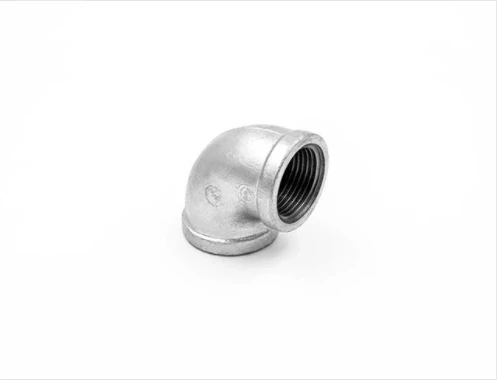
Examine the finish of the elbow. A smooth and uniform finish indicates a well-manufactured product. For Black Galvanized Pipe Fittings, the galvanized coating should be evenly applied, without any signs of peeling or uneven thickness. Any visible blemishes on the coating could expose the underlying metal to corrosion, which can significantly shorten the lifespan of the fitting.
Dimensional Accuracy
Dimensional accuracy is of utmost importance for pipes fittings elbow. Incorrect dimensions can result in poor fitting during installation, leading to leaks or improper flow. Use precision measuring tools such as calipers and micrometers to check the key dimensions of the elbow, including the outer diameter, wall thickness, and center-to-end dimension.
The outer diameter should match the specified size, ensuring a proper connection with other pipes and fittings in the system. The wall thickness affects the strength and pressure - bearing capacity of the elbow. If the wall thickness is too thin, the fitting may not be able to withstand the operating pressure, leading to failure. The center - to - end dimension is crucial for ensuring that the elbow fits correctly within the piping layout.
Material Analysis
Understanding the material composition of the pipes fittings elbow is essential for assessing its quality. Different applications require different materials, and the wrong material can lead to premature failure. There are several methods for material analysis.
One common method is chemical analysis, which can determine the exact composition of the metal. This helps to ensure that the elbow is made from the specified material and that it contains the appropriate alloying elements. For example, for Black Iron Street Elbows, the iron content and the presence of other elements like carbon and manganese can significantly affect the strength and ductility of the fitting.
Another technique is hardness testing. By measuring the hardness of the elbow, we can gain insights into its mechanical properties. A fitting with the correct hardness is more likely to resist wear, deformation, and corrosion. Common hardness testing methods include Rockwell, Brinell, and Vickers hardness tests.
Pressure Testing
Pressure testing is a critical step in evaluating the quality of pipes fittings elbow. It simulates the actual operating conditions of the piping system and helps to identify any potential leaks or weaknesses in the fitting.
There are two main types of pressure testing: hydrostatic testing and pneumatic testing. Hydrostatic testing involves filling the elbow with water and applying a specified pressure for a set period. The pressure is typically higher than the normal operating pressure of the system to ensure that the fitting can withstand any potential pressure surges. During the test, carefully monitor the fitting for any signs of leakage.
Pneumatic testing, on the other hand, uses air or another gas instead of water. This method is often used when water cannot be used, such as in systems that are sensitive to moisture. However, pneumatic testing is more dangerous than hydrostatic testing because gas is more compressible and can cause more severe damage in case of a failure. Therefore, strict safety precautions must be followed during pneumatic testing.
Flow Testing
The flow characteristics of the pipes fittings elbow are also important for the overall performance of the piping system. A well - designed elbow should allow for smooth and efficient fluid flow, with minimal resistance and turbulence.
Flow testing can be performed using flow meters and other instruments. By measuring the flow rate and pressure drop across the elbow, we can determine its hydraulic performance. A high pressure drop may indicate that the elbow has a rough interior surface, sharp bends, or incorrect dimensions, which can restrict the flow and reduce the efficiency of the system.
Non - Destructive Testing (NDT)
Non - destructive testing methods are used to detect internal flaws in the pipes fittings elbow without damaging the fitting itself. These methods are particularly useful for identifying hidden defects such as internal cracks, porosity, or inclusions that may not be visible during a visual inspection.
One common NDT method is ultrasonic testing. Ultrasonic waves are sent through the material, and any reflections or changes in the wave pattern can indicate the presence of a defect. Another method is magnetic particle testing, which is suitable for ferromagnetic materials. This method involves applying a magnetic field to the fitting and then sprinkling magnetic particles on its surface. Any defects in the material will cause the magnetic particles to accumulate, making the defect visible.
Corrosion Resistance Testing
Since pipes fittings elbow are often exposed to various corrosive environments, testing their corrosion resistance is crucial. There are several ways to evaluate the corrosion resistance of the fitting.
One method is the salt spray test. In this test, the elbow is placed in a chamber where it is exposed to a salt - water mist for a specified period. After the test, the fitting is examined for signs of corrosion, such as rust or pitting. The results of the salt spray test can provide an indication of how well the fitting will perform in a real - world corrosive environment.
Another approach is to analyze the protective coating on the fitting. For Black And Galvanized Malleable Fittings, the galvanized coating acts as a barrier against corrosion. Testing the thickness and adhesion of the coating can help to determine its effectiveness in protecting the underlying metal.
Conclusion
Testing the quality of pipes fittings elbow is a multi - faceted process that involves a combination of visual inspection, dimensional accuracy checks, material analysis, pressure testing, flow testing, non - destructive testing, and corrosion resistance testing. By conducting these tests, we can ensure that our products meet the highest quality standards and provide long - lasting performance in various piping applications.
If you are in the market for high - quality pipes fittings elbow, we are here to assist you. Our products are rigorously tested to ensure their reliability and performance. Contact us for more information and to discuss your specific requirements. We look forward to the opportunity to work with you and provide the best solutions for your piping needs.
References
- ASME B16.9 - Factory - Made Wrought Steel Buttwelding Fittings
- ASTM A105/A105M - Standard Specification for Carbon Steel Forgings for Piping Applications
- API 5L - Specification for Line Pipe