

Do black iron reducing elbows have a uniform wall thickness?
Nov 20, 2025
Do black iron reducing elbows have a uniform wall thickness? That's a question I've been asked quite a bit as a supplier of Black Iron Reducing Elbows. In this blog, I'll dive into this topic, share some insights, and give you a better understanding of what goes on with these essential pipe fittings.
First off, let's talk about what black iron reducing elbows are. They're crucial components in piping systems, used to change the direction of flow and connect pipes of different diameters. You'll often find them in plumbing, heating, and industrial applications. They're made from black iron, which is known for its strength and durability, making it suitable for a wide range of environments.
Now, back to the main question: do they have a uniform wall thickness? Well, the short answer is it depends. In an ideal world, you'd expect a black iron reducing elbow to have a consistent wall thickness throughout. This would ensure uniform strength and performance across the fitting. However, in reality, achieving perfect uniformity can be a bit of a challenge.
During the manufacturing process, there are several factors that can affect the wall thickness of black iron reducing elbows. One of the primary factors is the method of production. Most black iron reducing elbows are made through a process called forging or casting.
Forging involves shaping the metal by applying pressure, usually with a hammer or a press. This process can result in a relatively uniform wall thickness, as the metal is compressed and shaped in a controlled manner. However, even with forging, there can be slight variations. For example, the areas near the bends or the transitions between different diameters may experience more stress during the forging process, which can lead to minor differences in wall thickness.
Casting, on the other hand, involves pouring molten metal into a mold and letting it cool and solidify. This method can be a bit more prone to variations in wall thickness. The flow of the molten metal in the mold can be affected by factors like the shape of the mold, the temperature of the metal, and the presence of any impurities. These factors can cause the metal to solidify unevenly, resulting in areas with thicker or thinner walls.
Another factor that can influence wall thickness is the quality control measures in place during manufacturing. Reputable manufacturers will have strict quality control processes to ensure that the wall thickness of their black iron reducing elbows meets the required standards. They'll use techniques like ultrasonic testing or X-ray inspection to detect any significant variations in wall thickness. However, smaller or less - scrupulous manufacturers may not have such rigorous quality control, which can lead to more inconsistent wall thickness in their products.
So, why does wall thickness matter? Well, a uniform wall thickness is important for several reasons. Firstly, it affects the strength and durability of the fitting. If the wall thickness is inconsistent, there may be weak points in the elbow that are more likely to fail under pressure. This can lead to leaks, which can be a major problem in plumbing or industrial systems.
Secondly, wall thickness can impact the flow characteristics of the fluid or gas passing through the pipe. A non - uniform wall thickness can cause turbulence in the flow, which can increase energy consumption and reduce the efficiency of the system.
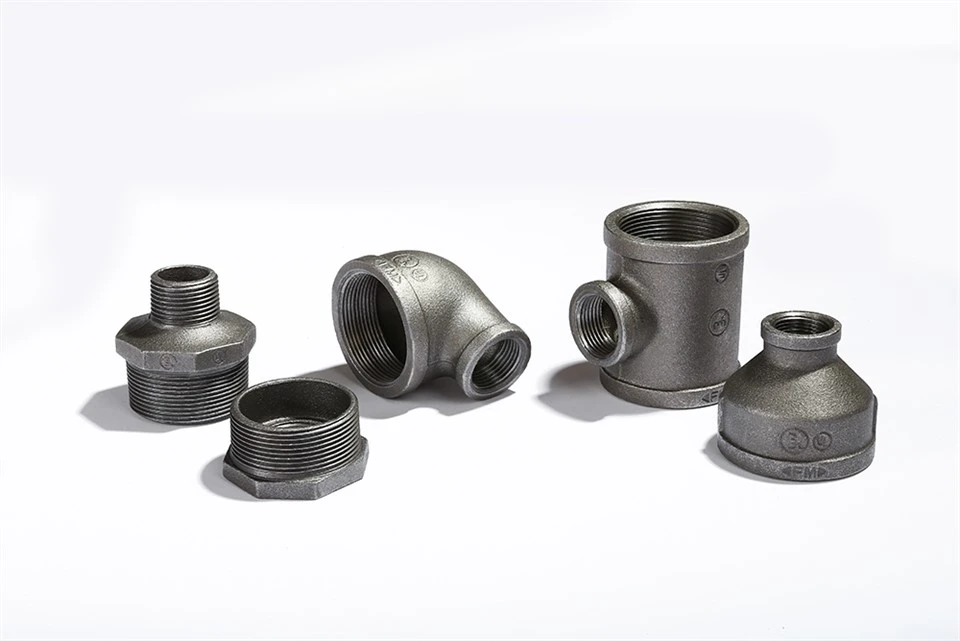

As a supplier of Black Iron Reducing Elbows, I understand the importance of providing high - quality products with as consistent wall thickness as possible. That's why I work closely with manufacturers who have a proven track record of quality control. I also encourage my customers to ask for product specifications and quality certificates to ensure that they're getting the best possible fittings for their applications.
Now, let's talk about some related products that you might be interested in. If you're in the market for other black iron pipe fittings, you might want to check out Black Iron Pipe Couplings. These are used to connect two pipes together and come in various sizes and configurations.
Another useful fitting is the Forged Threaded Reducing Tee. This fitting is used to split or combine the flow in a piping system and is designed to handle different pipe diameters.
And if you need a nipple with a reducing feature, the NR 245 Hexagon Nipple Reducing is a great option. It's a handy fitting for connecting pipes in tight spaces or when you need to adjust the pipe diameter.
In conclusion, while achieving a completely uniform wall thickness in black iron reducing elbows can be difficult, it's not impossible. By working with reliable manufacturers and implementing strict quality control measures, it's possible to get high - quality fittings with relatively consistent wall thickness. If you're in the market for Black Iron Reducing Elbows or any of the related products I mentioned, I'd love to help you find the right solutions for your needs. Whether you're a plumber, an engineer, or someone working on a DIY project, I can provide you with the information and products you need to ensure a successful installation. So, if you have any questions or are interested in making a purchase, don't hesitate to reach out and start a conversation about your requirements.
References
- "Pipe Fitting Handbook" - A comprehensive guide on the manufacturing and properties of various pipe fittings.
- Industry standards and specifications for black iron pipe fittings, such as ASTM standards.